Home › Sitework and Structural Concrete
Superior Concrete Athens provides sitework and structural concrete services for commercial and industrial projects in Athens, GA. Our team installs equipment pads, retaining walls, piers, pedestals, and other structural elements according to plans. We coordinate with general contractors and engineers to keep projects on track. Request a sitework and structural concrete bid today.
Superior Concrete Athens provides professional structural concrete throughout Athens, GA, Georgia and the surrounding area. Our licensed, insured crew delivers safe, clean, on-time work with a free estimate before anything begins. Call (706) 708-4734 or request your free quote.
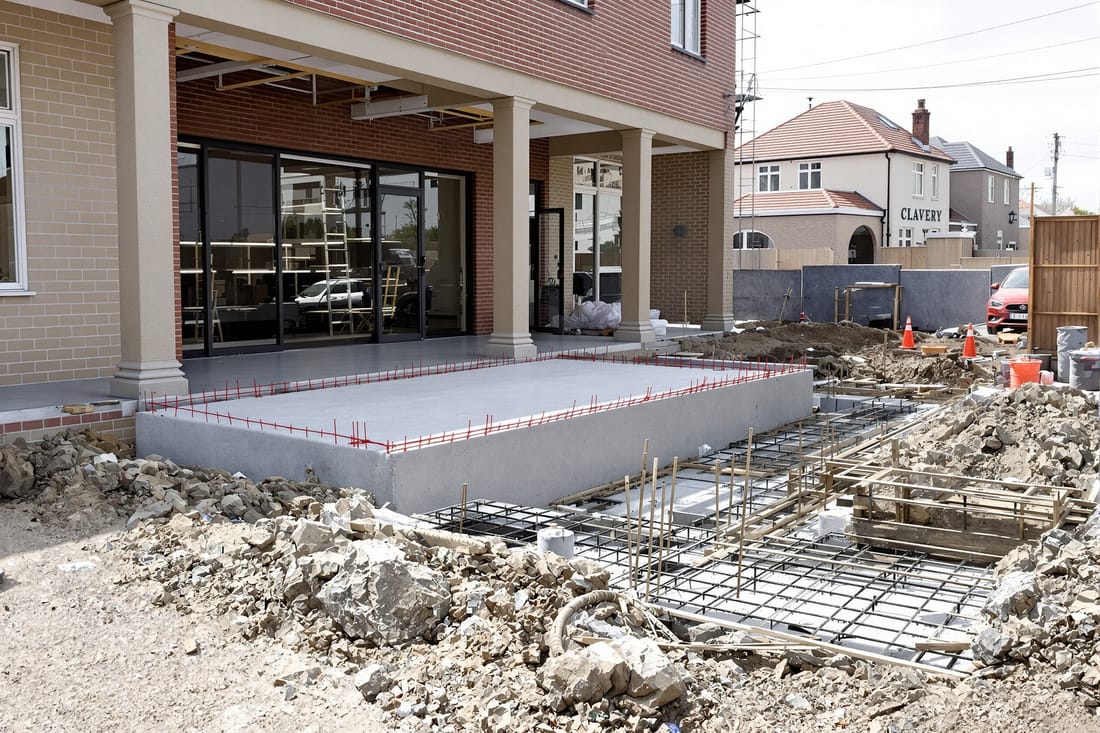
Sitework and structural concrete for Athens properties
Structural concrete and sitework are what make the rest of your project possible. At Superior Concrete Athens, we focus on getting the dirt work, footings, slabs, and structural elements right so your building stays level and crack free for decades.
In Athens, GA, soil conditions change a lot from one side of town to another. Inside the Loop you see older homes on clay that has already settled, while East Athens and parts of Oconee can have softer layers that move more when they get wet. That local soil behavior drives how we design and place structural concrete. We do not copy a generic detail from a plan set and call it good. We field check the site, probe the subgrade, and adjust thickness, reinforcement, and base prep so your concrete actually works where it is installed.
Whether you are building a new house off Jefferson Road, a small commercial building near the Loop, or a shop on acreage outside town, solid sitework and structural concrete are what keep doors closing properly, floors from sloping, and masonry from cracking.
How we handle sitework in and around Athens, GA
Quality structural concrete starts with the dirt. Our sitework crew clears and prepares the building pad so the concrete has a stable, uniform base.
Typical steps include:
1) Layout and elevations: We shoot elevations with a laser to verify the pad height against floodplain requirements, driveway tie-ins, and existing foundations. Around the North Oconee and low spots of Athens, we pay particular attention to drainage so water does not run back toward the slab.
2) Clearing and stripping: We remove trees, roots, topsoil, and organics. Athens lots, especially in older neighborhoods like Normaltown and Five Points, often have buried debris from previous structures. We dig out old brick, concrete, and loose fill so it does not end up under your foundation.
3) Cut and fill: We cut high spots and use suitable soil to fill low areas, then compact in thin lifts with plate tampers or rollers. Poor compaction is one of the most common reasons concrete settles or cracks. We test compaction where needed so the subgrade meets the densities your engineer or building department expects.
4) Base installation: For most structural slabs we place a compacted crushed stone or crusher run base. In areas with heavier clay pockets, we may recommend a thicker stone base or geotextile fabric to separate the stone from the clay. This keeps the base from pumping and losing support during wet seasons.
5) Drainage planning: We shape the pad and surrounding grades so water runs away from your foundation, not toward it. Gutters and downspout discharge areas are laid out early so they are not forgotten until after concrete is already placed.
Structural concrete elements we build
Superior Concrete Athens installs a full range of structural concrete systems for residential, light commercial, and agricultural projects.
For many Athens homes we build monolithic slab-on-grade foundations with thickened edges or separate footings and stem walls, depending on the engineer’s plans. Where crawlspaces are specified, we pour continuous footings and piers that align with floor framing and load paths.
Common structural concrete work we perform includes:
• Footings and foundations: Continuous strip footings, pad footings for columns, pier footings, and grade beams sized to your soil reports and local code. We adjust footing depth based on the plasticity of the local clay and required frost protection.
• Slabs on grade: House slabs, garage slabs, shop floors, warehouse floors, and thickened slabs for equipment or vehicle loads. We choose reinforcement type (rebar grid, post tension, or welded wire) based on span, loads, and cracking tolerance.
• Structural walls: Cast in place retaining walls for sloped Athens lots, basement walls, elevator pits, and shear walls for lateral stability. We handle waterproofing and drainage details so wall performance matches the design intent, not just minimum code.
• Stairs, landings, and ramps: Structural concrete stairs and ADA compliant ramps for commercial entries, churches, and multifamily projects.
If your project has structural drawings, we build to them and coordinate with your engineer when field conditions differ from assumptions. If you do not have an engineer yet, we can connect you with local professionals familiar with Athens permitting and typical soil profiles.
Our step-by-step process for structural concrete jobs
To keep your project on schedule and reduce surprises, we follow a clear process from first visit through final pour.
1) On site evaluation: We walk the property with you, review any plans, and look at access, slope, nearby structures, and drainage. In established Athens neighborhoods we note tight access, overhead lines, and parking constraints that may affect concrete truck routing or pump use.
2) Scope and pricing: We break out sitework, formwork, reinforcement, concrete placement, and finishing so you can see where the cost comes from. Factors that influence price include excavation depth, type and amount of reinforcement, concrete strength, pump needs, and any special finishes or vapor barriers.
3) Layout and forming: Our crew sets batter boards and pulls string lines to the plan dimensions, then sets forms to grade with stakes and braces. For structural elements, we double check anchor bolt locations, column block-outs, and embeds before concrete shows up so steel, framing, and mechanical trades can tie in cleanly.
4) Reinforcement installation: We install rebar, chairs, dowels, and mesh per the engineer’s details, tying and spacing them correctly instead of just tossing steel in the forms. We keep reinforcement at the right height so it is inside the concrete where it can actually do its job.
5) Concrete placement and finishing: We schedule concrete delivery to match crew size and site access. Where trucks cannot reach, we bring in a line pump. We vibrate or rod walls and thick sections to eliminate voids, then screed, float, and, if appropriate, saw cut control joints at the correct spacing and depth.
6) Curing and protection: Structural concrete is only as good as its cure. We use curing compounds, coverings, or wet curing, depending on temperature and wind. We post clear instructions on when you can walk, frame, or drive on each pour.
Local conditions, common problems, and how we handle them
Athens has hot summers, occasional winter cold snaps, and clay soils that swell and shrink with moisture. Those realities create predictable challenges for structural concrete.
Cracking: All concrete cracks, but you can control where and how. We plan joint layouts around walls, door openings, and column lines and saw them early before random cracks form. For larger slabs, we may recommend fiber reinforcement or thicker sections in high load areas like garage door openings.
Moisture and vapor: Slabs without proper vapor barriers can let ground moisture migrate into flooring. In new homes and commercial spaces, we typically install a poly vapor retarder under interior slabs and tape penetrations carefully, especially if you plan hardwood, vinyl, or adhesive applied flooring.
Settlement: On lots with previous fill or near creeks, settlement risk goes up. We can coordinate with a geotechnical engineer to evaluate the subgrade, then over-excavate and backfill with compacted stone or select fill, or shift to deeper foundations like piers or grade beams where it makes sense.
Freeze and temperature swings: While Athens is not a deep-freeze climate, occasional hard freezes and rapid spring temperature swings can stress poorly cured concrete. We adjust mix designs and curing methods by season, use hot or cold weather placement practices as needed, and avoid late day winter pours where temperatures will drop fast overnight.
Drainage and erosion: Many local lots have some slope, which can erode soil around foundations and slabs if not handled. As part of our sitework package we can add swales, basic surface drainage, or coordinate with your grading contractor to protect the concrete long term.
What to know before hiring a structural concrete contractor
Before you hire any company for sitework and structural concrete in Athens, there are a few things you should clarify.
Ask how they evaluate soil and drainage, not just whether they can follow a plan. A good contractor will talk specifically about compaction, base materials, and how they plan to get water away from your foundation on your particular lot.
Confirm they are comfortable reading engineered plans, using the specified rebar sizes and spacing, and documenting any field changes. Structural concrete is not a place to improvise because someone wants to save an hour of labor.
Request examples of similar projects in the Athens area, for example, a crawlspace foundation in an older in-town neighborhood, a post frame shop with a thickened edge slab, or a small commercial slab with interior thickened sections. Local experience matters because our soils and city inspection practices are different from Atlanta or rural counties.
Talk through access and scheduling. Tight driveways, narrow streets near campus, or long rural drives may require pumps, smaller trucks, or staging areas. Those details affect cost and timing.
Superior Concrete Athens is set up for this kind of work. We focus on clean layouts, stable subgrades, and correctly reinforced concrete so your structure has a dependable base. If you are planning a new build, addition, or major renovation in or around Athens, GA and need structural concrete and sitework done right the first time, we are ready to look at your plans and give you a clear, detailed proposal.